
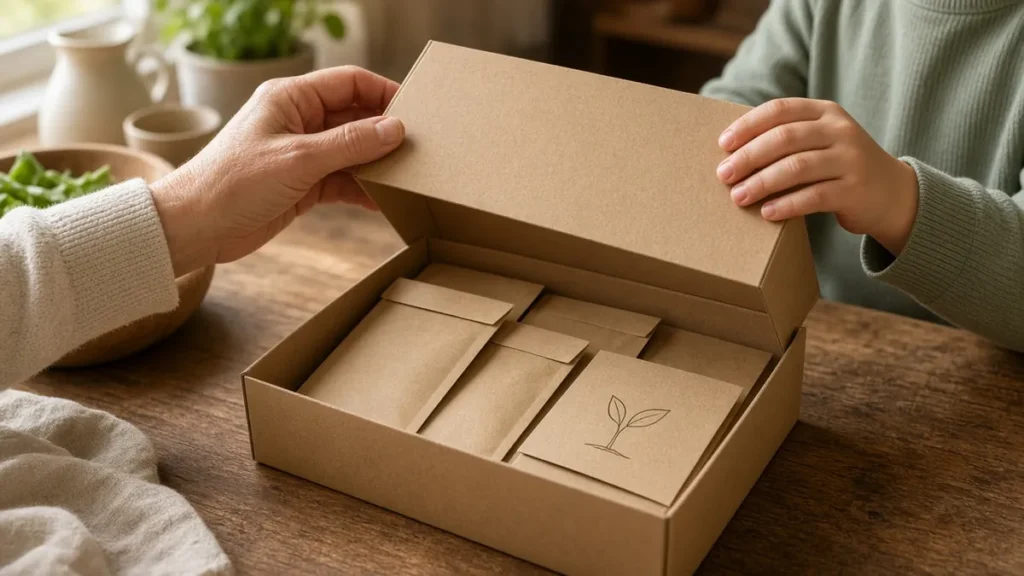
Ask anyone who grows food how they started, and many will mention a parent, grandparent or neighbour who let them help in the garden. Growing together is one of the nicest ways to share the skill. It doesn’t need a big garden or much equipment. A few pots on a windowsill or balcony will do.
Here’s how to make it fun and easy.
Keep it small and quick
Children like to see results. Choose crops that come up quickly and that they can pick themselves:
- Radish comes up fast and is ready in a few weeks, which keeps interest high.
- Salad leaves can be picked a little at a time, over and over.
- Peas are lovely to pick and eat straight from the pod.
- Herbs such as parsley and chives are easy, and children enjoy snipping them for dinner.
- Early potatoes in a big bag or tub are great fun to tip out and search through in summer.
Give each child their own pot or a small patch with their name on it. Ownership makes a big difference.
Pick the right time
In Ireland, most of the action is in spring. As a gentle guide:
- February: chit seed potatoes together on a windowsill and watch the shoots form.
- March: sow seeds indoors, and plant early potatoes in milder areas from mid-to-late March.
- April: the main month for sowing outdoors, once the soil isn’t cold and waterlogged.
- May: plant out tender crops once the risk of frost has passed. Late frost is a risk until about mid-May in most of Ireland, and later inland.
Always check the packet. Each one gives the sowing time for that variety.
Jobs children can do
Even small children can help with real jobs:
- Filling pots with compost (expect some mess)
- Sowing big seeds like peas and beans, one at a time
- Making labels with the crop name, the date and a drawing
- Watering with a small can
- Checking for slugs in the evening with a torch, which is often a favourite
- Picking salad, peas and herbs when they’re ready
Older children can keep a growing diary, measure seedlings each week, or take photos to compare.
Keep it safe
A few simple rules keep everyone happy:
- Wash hands after handling compost and soil.
- Only eat what a grown-up says is ready. Some garden plants and seeds aren’t safe to eat, and seeds are best kept out of reach of small children.
- Store tools safely, and use child-sized ones where you can.
- Keep seed packets somewhere dry and out of reach between sowings.
Make it part of the week
Short, regular visits work better than long sessions. Five minutes after school to check on the pots, or a Saturday-morning sowing, is plenty. Talk about what’s changing. Seeds that have just come up, a first flower on the peas, a slug trail across the pot: it’s all interesting to a child.
When something is ready, cook it together, even if it’s just a few radishes on a plate or a handful of peas in a salad. Eating something you grew yourself is a proud moment at any age.
Don’t worry about mistakes
Some seeds won’t come up. Slugs will eat a few seedlings. That’s part of growing, and it’s a good lesson too. Sow again, try a different spot, and keep going.
The aim isn’t a perfect garden. It’s time spent together outdoors, and a skill that children can carry with them for life.
Thinking of a present for a young grower? Our Gift kit is a gift-boxed kit, and it comes with a card showing the first sowing date. Kits go on sale in early February 2027, with delivery to Ireland and Northern Ireland. See the Gift kit →