
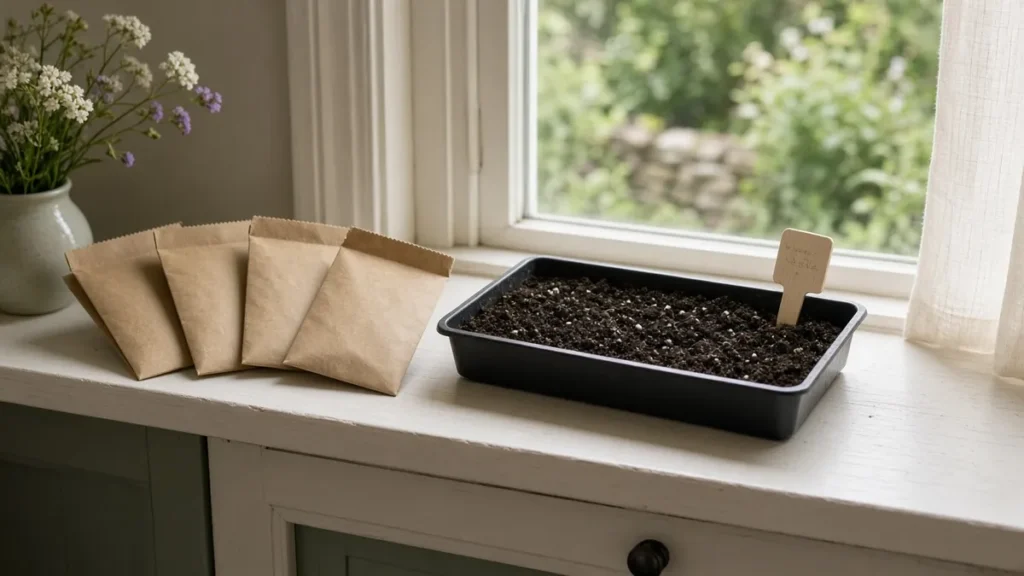
If you’ve raised seedlings on a windowsill or in a porch, they’ve had an easy life so far. Indoors there’s no wind, no cold nights and no heavy rain. Moving them straight outside can be a shock. Leaves can scorch, stems can snap, and plants can stop growing for a while.
Hardening off is the answer. It simply means getting plants used to outdoor conditions a little at a time, over a week or two. It’s one of the most useful habits a new grower can learn.
Which plants need hardening off?
Any plant raised indoors or under cover benefits from hardening off before it goes outside for good. That includes:
- Hardy crops started indoors, such as peas, lettuce, kale and onions
- Tender crops such as tomatoes, courgettes and beans
Seeds sown straight outdoors don’t need hardening off, because they’ve grown up outside from the start.
When to start
Timing depends on the crop.
- Hardy crops can usually be hardened off and planted out from around April, once the worst of the cold weather has passed.
- Tender crops shouldn’t go outside for good until the risk of frost has passed. Late frost is a risk until about mid-May in most of Ireland, and later inland. So start hardening them off in May, aiming to plant out once frosts are behind you.
If in doubt, wait a week. A plant that goes out a little later in good conditions usually catches up with one that went out too early.
A simple routine
There’s no single right way to do it, but this simple routine works well for many growers.
Days 1 to 3: Put your plants outside in a sheltered, shady spot for a few hours in the middle of the day. Bring them back in before evening.
Days 4 to 7: Leave them out for longer each day, and move them gradually into more sun. Keep bringing them in at night.
Days 8 onwards: If the weather is mild and no frost is forecast, leave them out overnight in a sheltered spot. After a few nights outside, they’re ready to plant out.
Go more slowly if the weather turns cold, wet or windy. Plants can stay inside on a bad day without losing their progress.
Helpful extras
You don’t need special equipment, but a few things make it easier:
- A cold frame, which is a low box with a clear lid. Open it during the day and close it at night.
- Garden fleece, to cover plants on cooler nights.
- A tray or box to carry lots of small pots in and out in one go.
- A sheltered spot against a wall, out of the wind.
Signs of stress
Keep an eye on your plants as they adjust.
- Pale or white patches on leaves can mean too much strong sun too soon. Move them into more shade for a few days.
- Wilting usually means they need water, or a break from the wind.
- Purple-tinged leaves on some plants can be a sign of cold. Bring them in for a night or two.
Most plants recover quickly once conditions suit them better.
Planting out
When the day comes:
- Water plants well an hour or so before planting.
- Plant on a calm, mild day, or in the evening, so they have a gentle night to settle in.
- Firm them in gently and water again.
- Watch for slugs, which are drawn to newly planted seedlings.
A habit worth learning
Hardening off takes a little patience, but it gives your plants the best start outdoors. Once you’ve done it once, it becomes part of the rhythm of spring.
Want an easy place to start? Our Spring Starter kit brings together five sealed supplier seed packets of easy crops, sent to you unopened, with a simple first-sowings plan and a card of Irish sowing dates. Kits go on sale in early February 2027, with delivery to Ireland and Northern Ireland. See the Spring Starter kit →