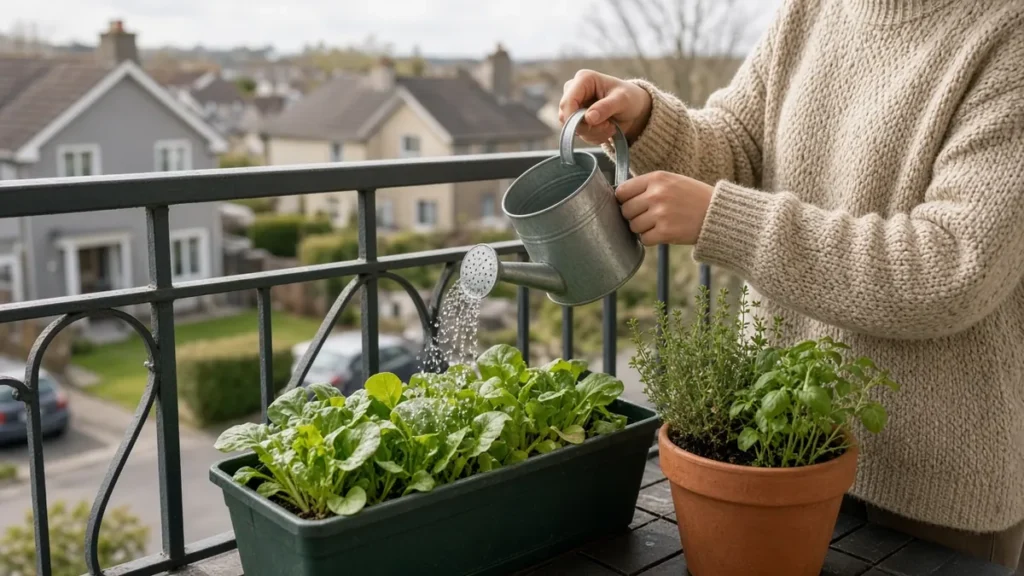
It’s easy to think that Irish rain will do the watering for you. In the ground, it often does. In pots, it’s a different story. Containers hold only a small amount of compost, so they dry out quickly. Wind, sun and a sheltered spot under a balcony above can all mean your pots get far less rain than you’d expect.
Good watering is one of the simplest ways to keep container plants happy. Here’s how to get it right.
Check, don’t guess
The best habit is to check your pots before you water, rather than watering on a fixed schedule.
Push a finger into the compost, up to the second knuckle. If it feels dry at that depth, it’s time to water. If it’s still damp, leave it for another day.
In warm or windy weather in summer, many pots need checking every day. In cooler, cloudy spells, every two or three days may be enough.
You can also lift a pot to feel its weight. A dry pot feels much lighter than a well-watered one. After a while you’ll know the difference without thinking.
Water well, not little and often
A quick sprinkle only wets the surface. The roots below stay dry. It’s better to water less often but more thoroughly.
- Water slowly until it starts to run out of the drainage holes at the bottom.
- Aim at the compost, not the leaves. Wet leaves don’t help the plant, and they can encourage disease.
- Give it a second go if the water runs straight through. Very dry compost can shrink away from the sides of the pot, so water escapes down the edges.
If a pot has dried out badly, stand it in a tray or bucket of water for half an hour so the compost can soak it up from below.
Pick the right time of day
Morning is usually the best time to water. Plants have what they need for the day ahead, and the surface dries off before evening, which makes it less inviting for slugs.
If you can only water in the evening, that’s fine. It’s far better than not watering at all.
Avoid watering in the full midday sun on a hot day if you can. More of the water is lost before it reaches the roots.
Choose pots that help
The type of container makes a big difference.
- Bigger is better. Larger pots hold more compost and dry out more slowly than small ones.
- Drainage holes are a must. Without them, roots sit in water and rot.
- Group pots together. They shade each other and stay cooler and damper.
- Use saucers with care. They catch drips, which your downstairs neighbours will appreciate. But don’t leave pots standing in water for days on end.
A layer of gravel or bark on top of the compost can help slow down drying, especially in larger pots.
Know which plants are thirsty
Some crops need steadier watering than others.
- Salad leaves turn bitter and run to seed if they dry out.
- Beans need steady watering once they start to flower.
- Herbs like rosemary and thyme prefer to dry out a little between waterings.
If you’re not sure, check the seed packet or plant label.
Watch for overwatering
Too much water can be as harmful as too little. Signs include yellowing lower leaves, compost that stays soggy for days, and a sour smell. If you notice these, water less often and check the drainage holes aren’t blocked.
Going away?
A few days away in summer needn’t be a worry.
- Move pots into a shadier spot, grouped together.
- Water everything thoroughly the morning you leave.
- Ask a neighbour or friend to check on them if you’re away for longer.
Make it easy
Keep a watering can close to your pots, or a water butt if you have space for one. When watering is a two-minute job, it’s much easier to keep up with.
Growing on a balcony or yard? Our Balcony kit brings together sealed seed packets for small-space favourites with a simple plan and sowing calendar for Irish conditions. Kits go on sale in early February 2027, with delivery to Ireland and Northern Ireland. See the Balcony kit →