
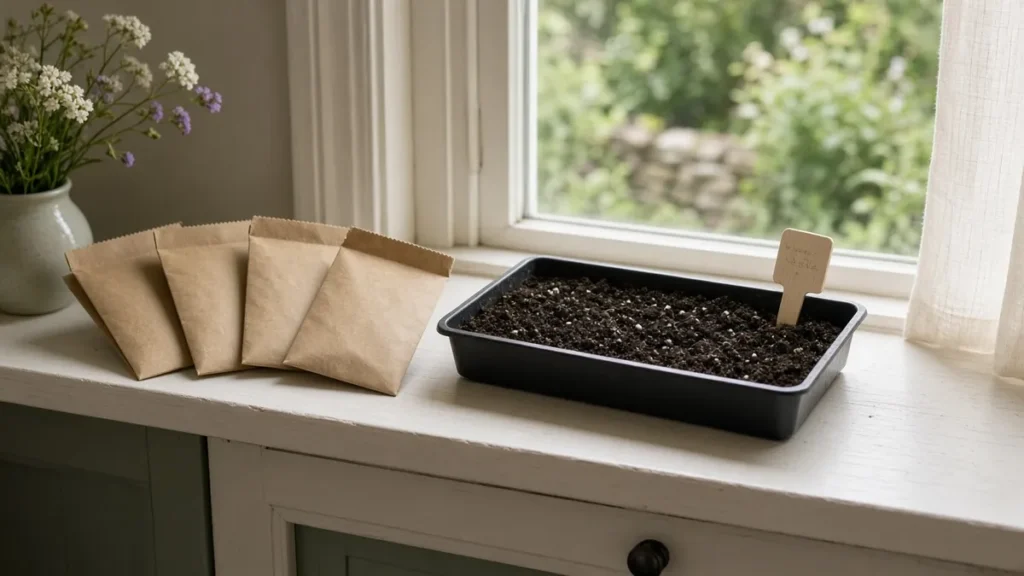
A seed packet is small, but it’s packed with useful information. If you’re new to growing, learning to read the back of a packet is one of the most helpful things you can do. It tells you what to do, when, and how. Here’s what to look for.
The front
The front usually shows the name of the crop and the variety. The variety matters. Two types of the same vegetable can grow quite differently. One pea might be short and bushy, another tall and climbing. If you’re growing in pots or on a balcony, look for words like compact, dwarf or bush.
The back: the useful bit
Most packets cover the same basics, though layouts differ from one supplier to the next.
When to sow. Many packets show a calendar with the sowing months marked. Some mark sowing indoors and sowing outdoors separately. Packets are often written for a wide area, so treat the dates as a guide. In Ireland, it’s sensible to aim for the later part of an outdoor sowing window, especially inland or in a cold spring.
Where to sow. Some crops are sown straight into the ground or a pot outdoors. Others are started indoors or under cover and planted out later. The packet will usually say which.
How deep. A useful rule is that small seeds need only a light covering, and bigger seeds go deeper. Follow the depth on the packet.
How far apart. Spacing tells you how much room each plant needs once it’s grown. It’s tempting to squeeze plants in, but crowded plants struggle. If you sow thickly, you’ll need to thin the seedlings out later.
When to expect seedlings. Some packets give a rough time for seeds to come up. In cool Irish soil, seeds often take longer than this, so be patient.
When to pick. Many packets give a rough time from sowing to picking, which helps you plan.
Sow-by or packed-for date. Look for a date on the packet. Fresher seed tends to come up more reliably, so sow within the date given.
Timing in Ireland
As a conservative guide for Irish conditions:
- Hardy crops like peas, radish and salad leaves can go outdoors from about March or April, once the soil isn’t cold and waterlogged.
- Tomatoes are sown indoors from March, on a warm, bright windowsill.
- Tender crops like courgettes and French beans are planted out only once the risk of frost has passed. Late frost is a risk until about mid-May in most of Ireland, and later inland.
If the packet and the weather disagree, trust the weather and wait a week.
Opening a packet
Open packets in a dry place, and tip a few seeds into your hand or a saucer rather than straight onto the compost. That makes it easier to sow thinly. Very fine seeds can be mixed with a pinch of dry sand to help spread them.
You rarely need a whole packet at once. Sowing a little every few weeks spreads your crops out over the season.
Storing seeds
Seeds keep best somewhere cool, dark and dry. Once you’ve opened a packet:
- Fold the top over and close it with a clip or tape.
- Keep packets in an airtight tin or jar.
- Store them away from the heat of the kitchen or a sunny windowsill.
- Write the date you opened it on the packet.
Keep unopened packets the same way until you’re ready to sow.
Sealed packets
When you buy seeds, look for packets that are sealed by the supplier. A sealed packet carries the supplier’s own information about the variety, the sowing times and the dates. It’s the most reliable way to know what you’re sowing.
Want an easy place to start? Our Spring Starter kit brings together five sealed supplier seed packets of easy crops, sent to you unopened, with a simple first-sowings plan and a card of Irish sowing dates. Kits go on sale in early February 2027, with delivery to Ireland and Northern Ireland. See the Spring Starter kit →