
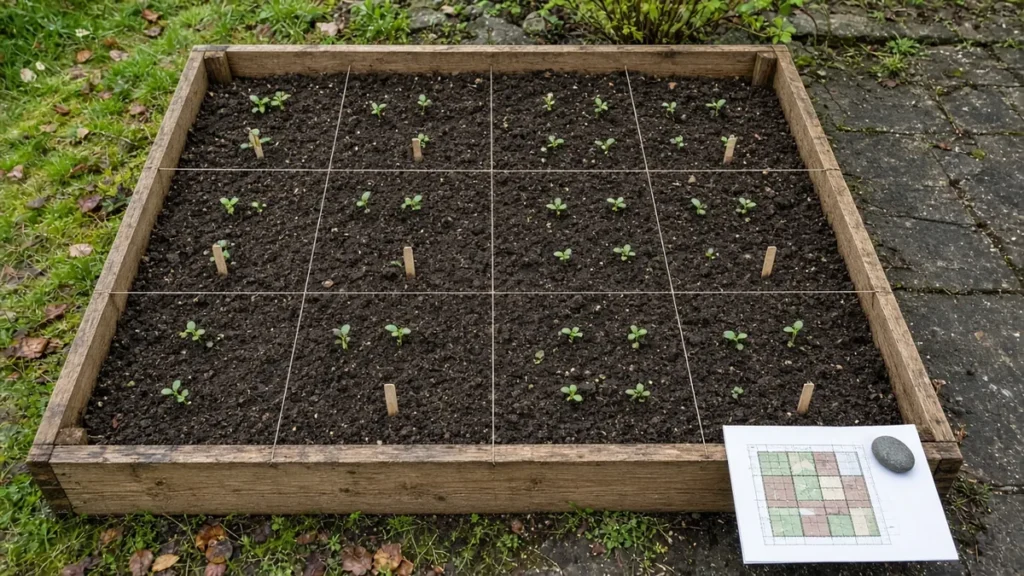
Carrots have a reputation for being a little fussy. In truth, they just need two things: loose, stone-free soil and a bit of patience. A raised bed gives you the first, which is why so many growers find carrots easier there than in heavy garden ground. The patience is up to you.
Why a raised bed suits carrots
Carrot roots grow straight down. When they hit stones, lumps or heavy clay, they can fork, twist or stay stunted. A raised bed filled with good topsoil and compost is usually looser and finer than ordinary ground, so the roots can grow down easily.
Deep containers work too, especially for shorter or round varieties. Check the seed packet for the expected length of the root, and choose a container deep enough to match.
Prepare the soil
- Rake it fine. Remove stones and break up any lumps.
- Avoid fresh manure. It can cause roots to fork. Use well-rotted compost, ideally added the season before.
- Firm it gently. A loose but level surface makes sowing easier.
When to sow
Carrots don’t like cold, wet soil, and seeds sown too early often sit and do nothing. As a conservative guide for Irish conditions:
- From about April, sow outdoors once the soil has warmed a little and isn’t waterlogged. In milder areas, some growers start in late March.
- Every few weeks after that, sow another short row, through to about early summer, so you have carrots coming on at different times.
If in doubt, wait a week or two. Carrots sown into warm soil often catch up with those sown into cold soil.
How to sow
Carrot seed is tiny, so sowing thinly takes a little care.
- Make a shallow line in the soil, at the depth given on the packet.
- Water the line before sowing.
- Sprinkle the seed thinly along it. Mixing it with a pinch of dry sand can help spread it out.
- Cover lightly with fine soil.
- Label the row with the date.
Be patient
Carrots are slow to come up, sometimes taking a few weeks, especially in cool weather. Keep the soil surface damp during this time. A dry crust on top can stop the seedlings breaking through.
It can help to sow a few radish seeds along the same row. They come up quickly and mark where your carrots are.
Thinning
When the seedlings are big enough to handle, thin them out so each carrot has room to grow. Follow the spacing on the packet.
Thin on a still, damp evening if you can, and firm the soil back around the remaining plants afterwards. Take the thinnings away rather than leaving them on the bed.
Watch for carrot fly
Carrot fly is a common pest. The flies are drawn by the smell of carrot leaves, especially when they’re bruised during thinning. Their larvae tunnel into the roots.
A few simple steps help:
- Thin carefully, as above, and as little as possible.
- Cover the row with fine insect mesh from sowing onwards, sealed at the edges.
- Grow carrots in a raised bed or tall container, which some growers find helps.
Watering and weeding
- Water steadily in dry spells. Uneven watering, with dry soil followed by a heavy soaking, can cause roots to split.
- Weed by hand while the seedlings are small. Young carrots don’t like competition, and their feathery leaves are easy to lose among weeds.
Lifting
Carrots can be lifted at any size you like. Young, finger-sized carrots are lovely and sweet. Gently loosen the soil beside the row with a hand fork before pulling, so the roots don’t snap.
Lift what you need, and leave the rest in the ground to keep growing.
Worth the wait
Pulling your first carrot out of the soil is a lovely moment, especially for children. Give them fine soil, steady moisture and a little time, and carrots are well worth the wait.
Planning your first raised bed? Our Raised Bed kit, our lead kit, comes with sealed seed packets, a bed layout plan and a sowing calendar for Irish conditions. Kits go on sale in early February 2027, with delivery to Ireland and Northern Ireland. See the Raised Bed kit →